Kent Business College

College of Project Controls and Project Management

Practical training in project planning, scheduling, cost, risk, reporting, governance and AI-enabled project controls. Government funding may be available for eligible apprentices and employers, subject to the applicable rules.

September, January and April intakes Funding routes subject to eligibility Practical workplace learning
CoursesFocused four-month KBC course credits
ProgrammesGroups of courses built around career pathways
FundingGovernment apprenticeship funding and Institute of Project Controls support
Start simple

What the College of Project Controls and Project Management helps you do

Build practical capability for clearer planning, stronger controls and better project decisions.

Plan projects clearly

Structure scope, schedules, milestones and delivery assumptions.

Control cost and progress

Track performance, forecast outcomes and act on variance.

Manage risk and change

Control risks, issues, changes and quality before escalation.

Report with confidence

Turn project data into useful dashboards and briefings.

Use artificial intelligence tools

Use AI to support analysis, reporting and workflows.

Work towards professional recognition

Progress towards recognised qualifications and career goals, subject to the relevant professional body’s requirements.

Personal relevance

Who is this for?

For project controls, engineering, delivery and leadership professionals who work with project data, plans, costs, risks and reporting.

Project controls and delivery roles

  • Project controllers, planners and schedulers
  • Cost, risk and reporting professionals
  • PMO analysts and project coordinators

Engineering, construction and infrastructure roles

  • Project and site engineers
  • Construction and infrastructure teams
  • Technical professionals moving into controls

Leadership, governance and employer roles

  • Project and programme managers
  • PMO, planning and cost leaders
  • Employers developing delivery capability
Project controls in practice

See how planning, data and teamwork connect

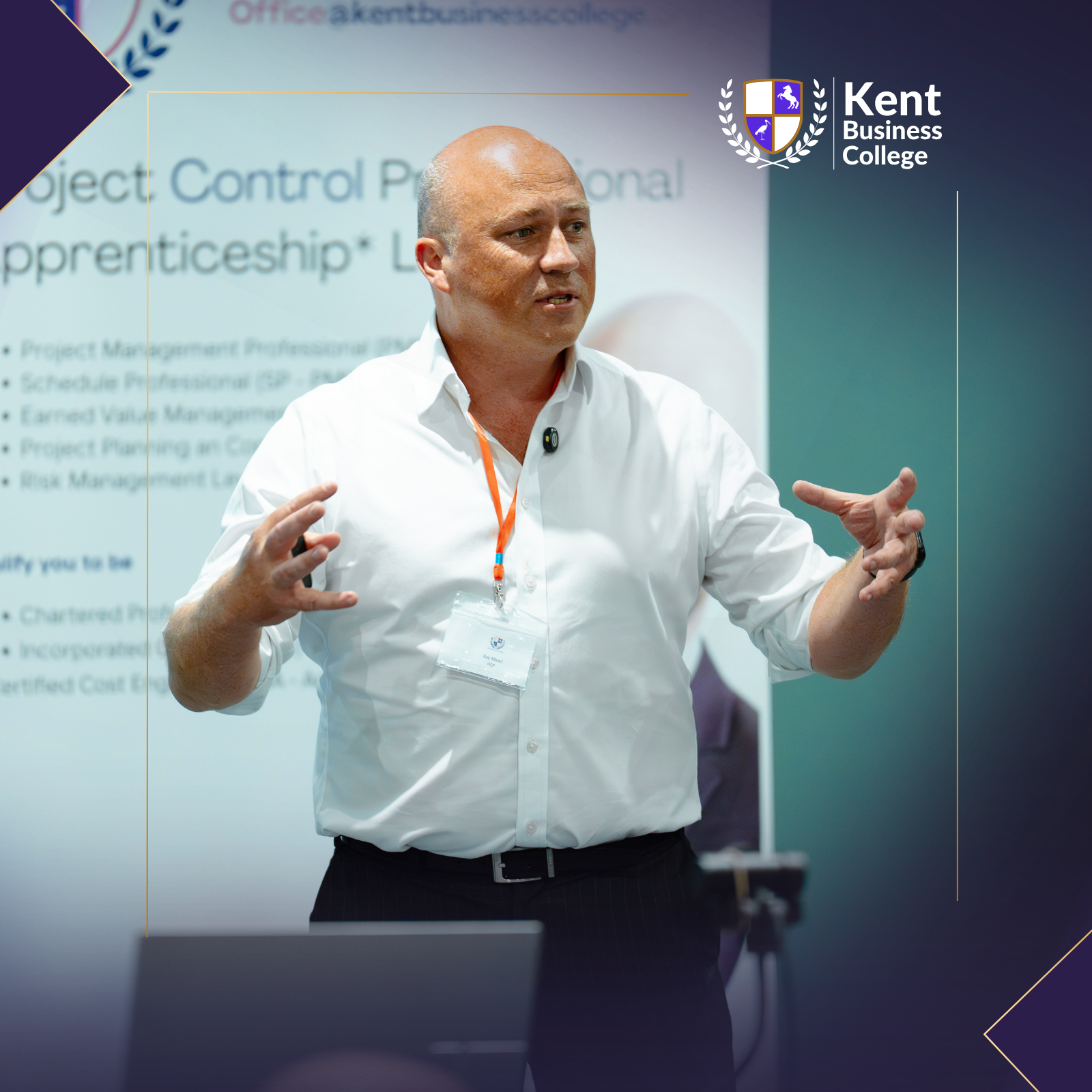
Connect planning, dashboards and teamwork with practical project environments.
Understanding the structure

Courses and programmes explained simply

A course is one focused KBC course credit. A programme combines KBC course credits into a professional or apprenticeship pathway.

1

One course

One focused four-month KBC course credit.

2

Multiple courses

Courses can be combined into a larger pathway.

3

Funding routes

Government apprenticeship funding or Institute of Project Controls support may be available, subject to the applicable eligibility and approval criteria.

KBC course-credit note: KBC course credits are internal programme-building units used to structure KBC learning pathways. They are not regulated academic credits.
Main intakes begin in September, January and April. Admissions will confirm the best available start date.
Programmes

Apprenticeship programmes and professional pathways

Choose a pathway matched to your role, workplace evidence and professional goals. Government funding may be available for eligible apprentices and employers; KBC confirms the applicable funding arrangement and any employer contribution before enrolment.

Project Controls Professional Level 6

Senior work-based development in planning, cost, risk, governance, reporting and project controls leadership.

Six KBC course-credit senior pathwayStrategic workplace evidenceFIPC Level 6 recognition routeProfessional-recognition progression support
Operational pathwayStrategic pathwayProfessional recognition

Associate Project Manager Level 4

A work-based route combining project management practice with AI-enabled project controls.

PMP® certification preparationArtificial Intelligence in Project ControlsAssociate Fellow Level 4 routeEligible apprenticeship funding pathway
PMP® preparationAI in ProjectsAFIPC L4
External recognition remains subject to each professional body’s current assessment and membership rules.
APM recognition: KBC’s Certified PMO Professional (Level 6) is listed by APM as a recognised assessment under Pathway 2 for technical knowledge. Chartered Project Professional (ChPP) status is subject to APM’s remaining eligibility, application and assessment requirements.

Ready to identify the right route?

Review your programme fit, eligibility and funding before choosing your next intake.

Career pathways in action

Learn, apply and progress

A visual journey from guided learning to workplace application and professional progression.

Learners studying project controls and project management together
LearnLive classes and guided practice
Project team applying planning and controls methods in a workshop
ApplyWorkplace tools and evidence
Professionals collaborating and progressing in project careers
ProgressRecognition and career development
Strategic project control roles

Leading project controls, risk, governance and senior delivery decisions

For experienced professionals leading project controls, assurance, planning, cost, risk and senior reporting decisions.

Head of Project Controls Project Controls Lead Planning Lead Scheduling Lead Cost Engineering Lead Risk Practitioner Project Management Office Lead Senior Project Controls Professional
Operational route: planning, scheduling, earned value, risk and reporting

Choose a focused route matched to your role, evidence and professional progression goals.

Required corePMP® certification preparation, counted as two KBC course credits within KBC’s internal pathway structure.
Choose four further KBC course creditsScheduling Professional, Earned Value Management, Project Planning and Control, Artificial Intelligence in Project Controls, or Association for Project Management Risk Management.
Strategic route: portfolio, programme and Project Management Office leadership

Choose a focused route matched to your role, evidence and professional progression goals.

Required corePMP® certification preparation, counted as two KBC course credits within KBC’s internal pathway structure.
Choose four further KBC course creditsManaging Successful Programmes, Management of Portfolios, Project Management Office course, Association for Project Management Risk Management, or Artificial Intelligence in Project Controls.
Professional recognition progression route: evidence and assessment

Choose a focused route matched to your role, evidence and professional progression goals.

Core programmeCertified Project Management Office Professional Level 6 modules.
Additional KBC course creditsArtificial Intelligence in Project Controls plus Management of Portfolios or Earned Value Management.
Empowering project managers

Associate Project Manager Level 4 for project managers in any sector

For project managers across engineering, consultancy, business services, technology and transformation.

PMP® certification preparation

Duration: 8 months. This course is counted as two KBC course credits within KBC’s internal pathway structure and develops structured project management knowledge, planning, delivery control, stakeholder engagement, leadership and professional exam preparation.

Two KBC course credits8 months

PMP® eligibility: PMP® is awarded by the Project Management Institute (PMI). Apprenticeship eligibility does not guarantee eligibility to sit the PMP® examination. PMI’s current experience, education, training and examination requirements apply.

Certificate in Artificial Intelligence in Project Controls

Duration: 4 months. Learners apply artificial intelligence to project dashboards, reporting workflows, recommendations, communication systems and project controls decision support.

One KBC course credit4 months

Work-based route

Study is connected to the learner's project duties, evidence opportunities and employer development goals.

Associate Fellow Level 4 — AFIPC L4

Designed to support Institute of Project Controls recognition where the learner meets the applicable evidence and membership requirements.

Apprenticeship funding route

Government apprenticeship funding may be available under the applicable 2026/27 funding rules where learner, employer and programme eligibility conditions are met. KBC confirms the funding position before enrolment.

Course content

Courses at the College of Project Controls and Project Management

Combine recognised project management, project controls and AI courses into a practical pathway.

Association for Project Management courses
Risk Management Subject MatterRisk thinking, analysis, response planning and professional risk practice.
Project Management QualificationBroad project management knowledge for people managing or supporting projects.
Project Fundamentals QualificationIntroductory project management knowledge for new or developing project professionals.
APMG International courses
Management of PortfoliosPortfolio governance, prioritisation, benefits and strategic alignment.
Managing Successful ProgrammesProgramme governance, benefits, leadership and complex change delivery.
Project Planning and ControlPlanning, baselining, progress monitoring, controls and recovery planning.
Earned Value ManagementCost and schedule performance measurement, variance and forecasting.
Project Management Institute courses
PMP® certification preparationAdvanced project management preparation.
Certified Associate in Project ManagementFoundation route for learners developing structured project management knowledge.
Risk Management Professional certificateSpecialist risk management preparation for project environments.
Scheduling Professional certificateSpecialist scheduling, planning and time-management preparation.
Project Management Office courseProject Management Office structure, services, governance and reporting practice.
Institute of Project Controls courses
Project Management Office fundamentals and organisational governanceOperating model, authority, assurance, stage-gates and governance design.
Project planning, scheduling and integrated controlsIntegrated baselines, schedule logic, cost control, forecasting and change control.
Risk, issue and quality management in projectsRisk, issue, quality, assurance, continuous improvement and team behaviours.
Stakeholder management, communications and reportingStakeholder engagement, executive reporting, dashboards, influence and benefits.
Artificial Intelligence in Project ControlsArtificial intelligence tools for dashboards, insight, recommendation and reporting workflows.
Project data, simulation and dashboard practiceProject data analysis, project simulation modelling, project data management and artificial…
Study model

How you study

A simple four-step study model designed for working professionals.

1

Prepare

Prepare with short reading and evidence review.

2

Attend live classes

Join live teaching, workshops and worked examples.

3

Apply at work

Use tools in real or approved project settings.

4

Reflect and improve

Capture evidence, feedback and improvement.

Live and recorded learning

Tutor-led sessions supported by digital resources.

Applied assessment

Portfolios, templates and practical evidence.

Working professional rhythm

Planned study around work and progress reviews.

Project management professionals learning through a practical workshop
Practical study modelLearn today. Apply tomorrow.

Can this study model fit around your work?

Speak with the team about live sessions, workplace learning and the most suitable intake.

Benefits of studying with us

More than a qualification

Support for your learning, career confidence, wellbeing and professional network.

01

Wellbeing and learner support

Support throughout your learning journey.

  • Benenden Health membership and healthcare support during the programme, subject to the applicable service terms
  • Mental wellbeing support tools
  • AI-powered learning platform
  • Hard-copy and digital materials
02

Know yourself and build your career

Understand your strengths and career direction.

  • Inclusiveness and support assessments
  • Optional personality traits assessment
  • Job-fit and career-fit tools
  • Career pathway guidance
03

Professional recognition and networking

Build recognition, confidence and connections.

  • Graduation ceremony
  • London Masterclass events
  • Professional body memberships
  • Networking and profile development
For employers

Develop internal capability that improves delivery

Develop practical capability that improves governance, controls, reporting and staff progression.

Stronger governance

Clearer authority, escalation, decision records, assurance and project review cadence.

Reliable controls

Improved baselines, schedules, cost forecasts, risk visibility and change control.

Decision-ready reporting

Fewer data dumps and more useful insight, narrative, options and recommended action.

Staff retention and progression

A visible development pathway for high-potential project, controls and delivery professionals.

Workplace evidence

Learners produce artefacts that can support project reviews, governance forums and improvement plans.

Capability transfer

Line managers can support evidence access, practical application and progress reviews where relevant.

Discuss training for your team

Explore programme fit, funding routes and workplace requirements for your employees.

Feasibility

Apprenticeship eligibility made simple

Eligibility depends on the learner, employer, role, residency, workplace evidence and funding rules.

Typical learner and employer checks

  • The learner meets the applicable residency and immigration-permission requirements for the apprenticeship route.
  • The learner spends at least 50% of working time in England over the apprenticeship, including remote or hybrid work where applicable.
  • The learner has the right to work and sufficient immigration permission for the planned programme duration, where applicable.
  • The employer agrees to support the apprenticeship and workplace learning.

What we help confirm

  • The right programme level for the learner's role and experience.
  • Whether the role can generate suitable workplace evidence.
  • Whether government apprenticeship funding, employer funding or Institute of Project Controls support is the most appropriate route.
  • Which course start date is most suitable: September, January or April.

Check your programme and funding eligibility

The team can help confirm your role, workplace evidence, residency position and the most appropriate route.

Funding and costs

Funding options after we confirm fit

The right funding route depends on programme fit, learner status and employer eligibility.

KBC course-credit value

Each four-month KBC course credit has a commercial tuition value of £4,000. The PMP® or Certified Associate in Project Management preparation route is counted as two KBC course credits within KBC’s internal pathway structure. Most other listed courses are counted as one KBC course credit. KBC course credits are internal programme-building units and are not regulated academic credits.

Apprenticeship route

Government funding may cover eligible apprenticeship training and assessment costs up to the applicable funding-band maximum, subject to the learner, employer and programme meeting the current rules. The amount depends on the apprentice’s start date and age, the employer’s levy position, agreed eligible costs and any relevant prior learning. KBC confirms any employer contribution before enrolment.

Kent Business College project management programme experience

What the course and programme package is designed to include

London Masterclass Professional memberships Professional clubs Institute of Project Controls membership for two years Benenden Health membership and healthcare support, subject to applicable service terms Access to our mental wellbeing system Inclusiveness assessments Optional non-diagnostic education-barrier assessment Optional personality traits assessment Job and career fitness psychological tests

Institute of Project Controls Fund

The Institute of Project Controls Fund may support eligible applicants by contributing towards tuition fees, subject to pathway, evidence and approval criteria.

Institute of Project Controls support for unemployed or self-employed applicants

Support may be available for eligible unemployed or self-employed applicants, subject to the current Fund terms, evidence requirements and approval. KBC confirms the applicable contribution before enrolment.

Institute of Project Controls support for employed applicants

Support may be available for eligible employed applicants, subject to the current Fund terms, evidence requirements and approval. Any learner or employer contribution is confirmed before enrolment.

Funding eligibility can vary. You can visit the Institute of Project Controls website at www.instituteofprojectcontrols.org or speak to the Kent Business College team to discuss the most appropriate funding option.

Discuss the funding route for your circumstances

Confirm programme fit, funding conditions and the next available start date with the Kent Business College team.

Take the next step

Speak with us about your route, funding and next intake

Whether you are a learner, employer, self-employed professional or unemployed applicant, the team can help you understand the right route and the next start date.

Frequently asked questions

Practical answers before you apply

What is the difference between a course and a programme?

A course is a focused four-month KBC course credit. A programme is a structured group of courses that build towards a larger professional pathway, apprenticeship route or career outcome. KBC course credits are internal programme-building units and are not regulated academic credits.

When do courses start?

The main course start dates are September, January and April. The team will confirm the most suitable intake for your selected course or programme.

Are these courses only for Project Management Office professionals?

No. They are also suitable for project engineers, project controllers, planners, schedulers, cost controllers, cost engineers, estimators, reporting analysts, risk professionals, delivery leads, project managers and employers building project capability.

Can I study while working full time?

Yes. The learning model is designed for working professionals, but learners must protect time for live sessions, independent study, workplace application and assessment preparation.

Can government funding cover apprenticeship training and assessment costs?

Government funding may cover eligible training and assessment costs up to the applicable funding-band maximum, subject to the current rules. Eligibility and the employer contribution depend on factors including the apprentice’s start date and age, the employer’s levy position, agreed eligible costs, prior learning, residency and immigration status, and the requirement to spend at least 50% of working hours in England. KBC’s planned protected study time varies by programme and is confirmed in the individual training plan after initial assessment and recognition of prior learning.

Which route is right for me?

The best route depends on your role, experience, employer duties, evidence opportunities, career goals and funding eligibility. The simplest next step is to book an information session.


Follow Kent Business College

Stay connected with our project controls and project management community

Chat with KBC Support
KBC Support

Please verify this info

THE NOTTINGHAM CLUB

An Unparalleled Journey into Refined Connection

This is not merely an event; it is an introduction to an elevated way of life. The Nottingham Club officially opens its doors in Week 29, marking the dawn of a new era for our city’s distinguished and ambitious.

Join us in an intimate celebration, set within a truly unique, wood-paneled space that speaks to….

Apply Now


Grow Professionally